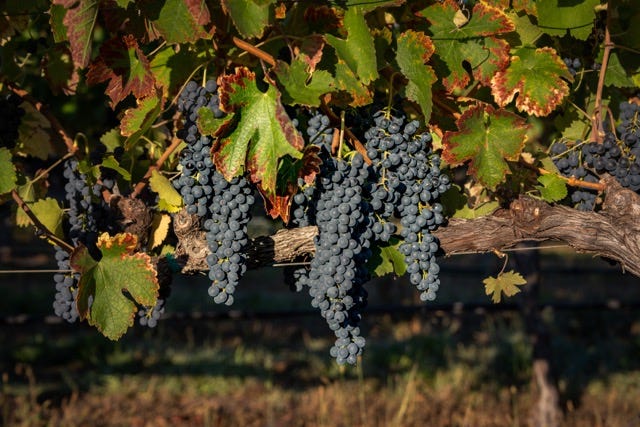
Summary: Schramsberg marked the start of its 2026 harvest on Thursday, July 23, with its annual sabering ceremony and blessing of the grapes on the crush pad above its caves on Diamond Mountain southwest of Calistoga. Ten tons of pinot noir from the Casa del Sol vineyard in Carneros sat on the pad, though owner Hugh Davies said the winery's first fruit of the year came in a week earlier from Sonoma County. Acidities are running 1 to 3 grams per liter above normal, and Davies said the season resembles 2015 in both timing and low yields. Cabernet could finish as early as late September.
"Clusters are light, berries are small." — Hugh Davies, owner, Schramsberg
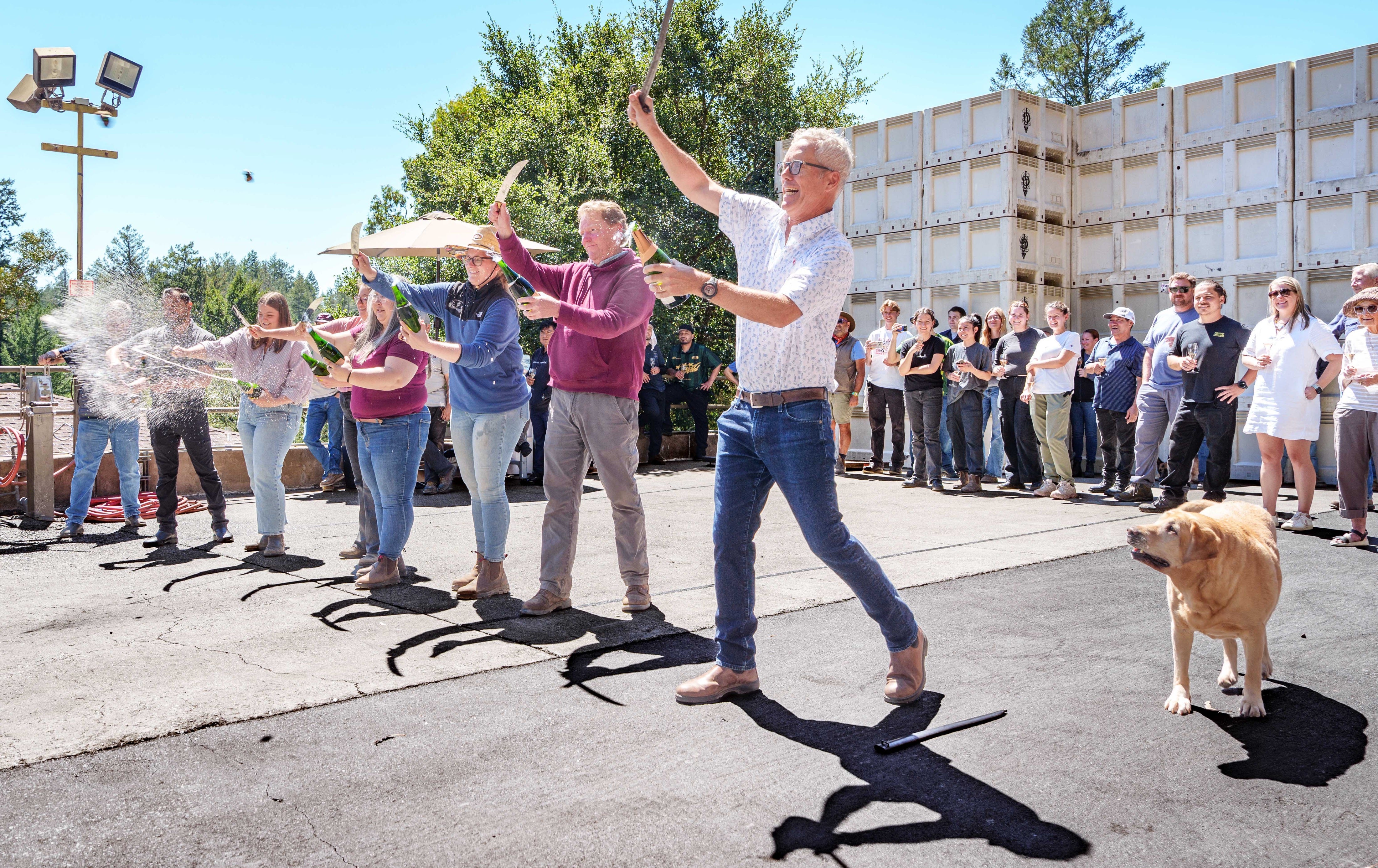
CALISTOGA, Calif. — With a flash of steel and a spray of foam, Hugh Davies and his crew sabered open bottles of sparkling wine Thursday morning and poured them over bins of pinot noir, opening Schramsberg’s 2026 harvest.
The ceremony happens where the work happens: on the concrete slab above the winery where fruit is tipped down into the press and beneath which Jacob Schram's 1870s caves run back into the mountain. Roughly 60 to 80 people filled the pad at 11 a.m. — cellar and vineyard crews, family, guests — standing three deep as bottle necks flew and corks skittered across the asphalt.
Davies said the winery is now in its 62nd harvest, counting from the 1965 revival of the property by his parents, Jack and Jamie Davies.
A Winery Above the Valley Floor
Schramsberg carries a Calistoga address, 1400 Schramsberg Road, but it sits outside the appellation that bears the town’s name: The winery lies southwest of town, up off Highway 29 on the eastern flank of the Mayacamas range, inside the Diamond Mountain District.
Schram planted the first vines here in 1868 and dug the winery's caves in the years that followed. The estate sat idle for decades until the Davies family bought it in 1965.
The drive to the winery still shows the scars of the 2020 Glass Fire. The blaze started in Deer Park on the far side of the valley, crossed the valley floor and burned through the Schramsberg property, opening views of estate vineyards that the forest had largely hidden. Davies told Napa Valley Features last year that the winery ran on a generator for 77 days off the electrical grid before the fire closed in around them.
Davies addressed the gathering in English and then in Spanish, without notes or staging — closer to a family speaking to the people it works with than to a promotional event.
Vice President of Winemaking Sean Thompson, who joined the sabering line in a red hooded sweatshirt, is working his 21st harvest at Schramsberg and his 35th in the industry.
A Blessing With Roots
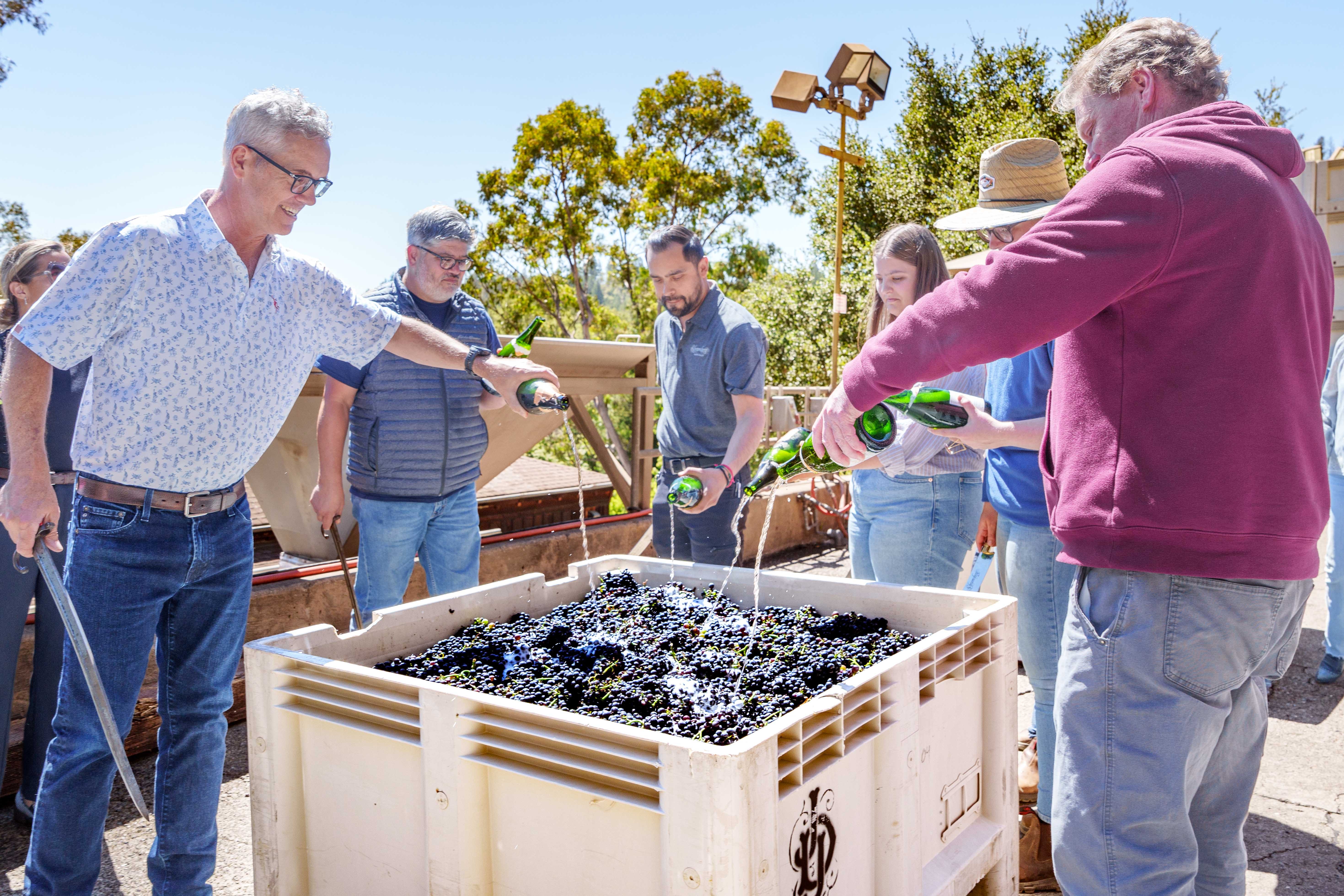
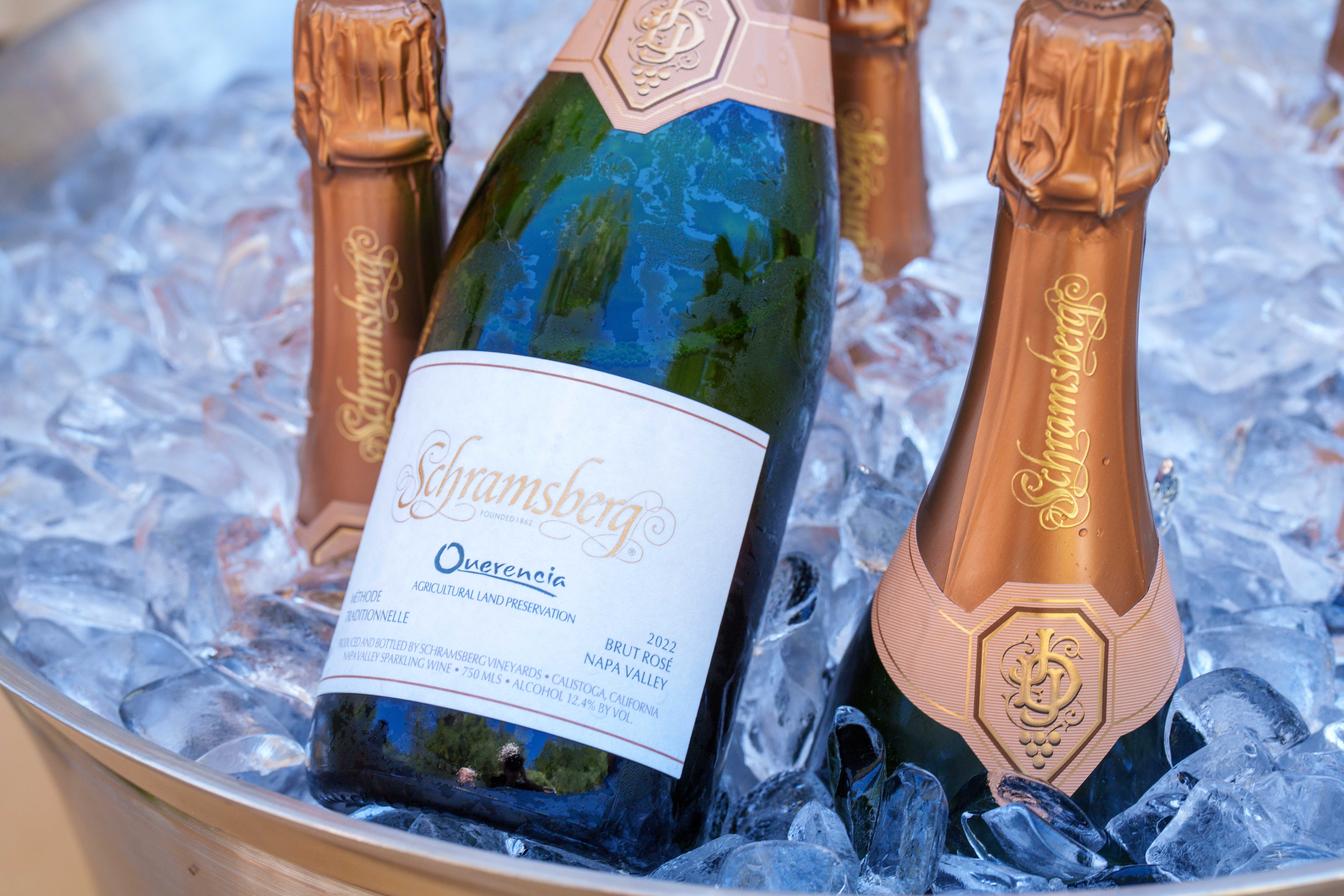
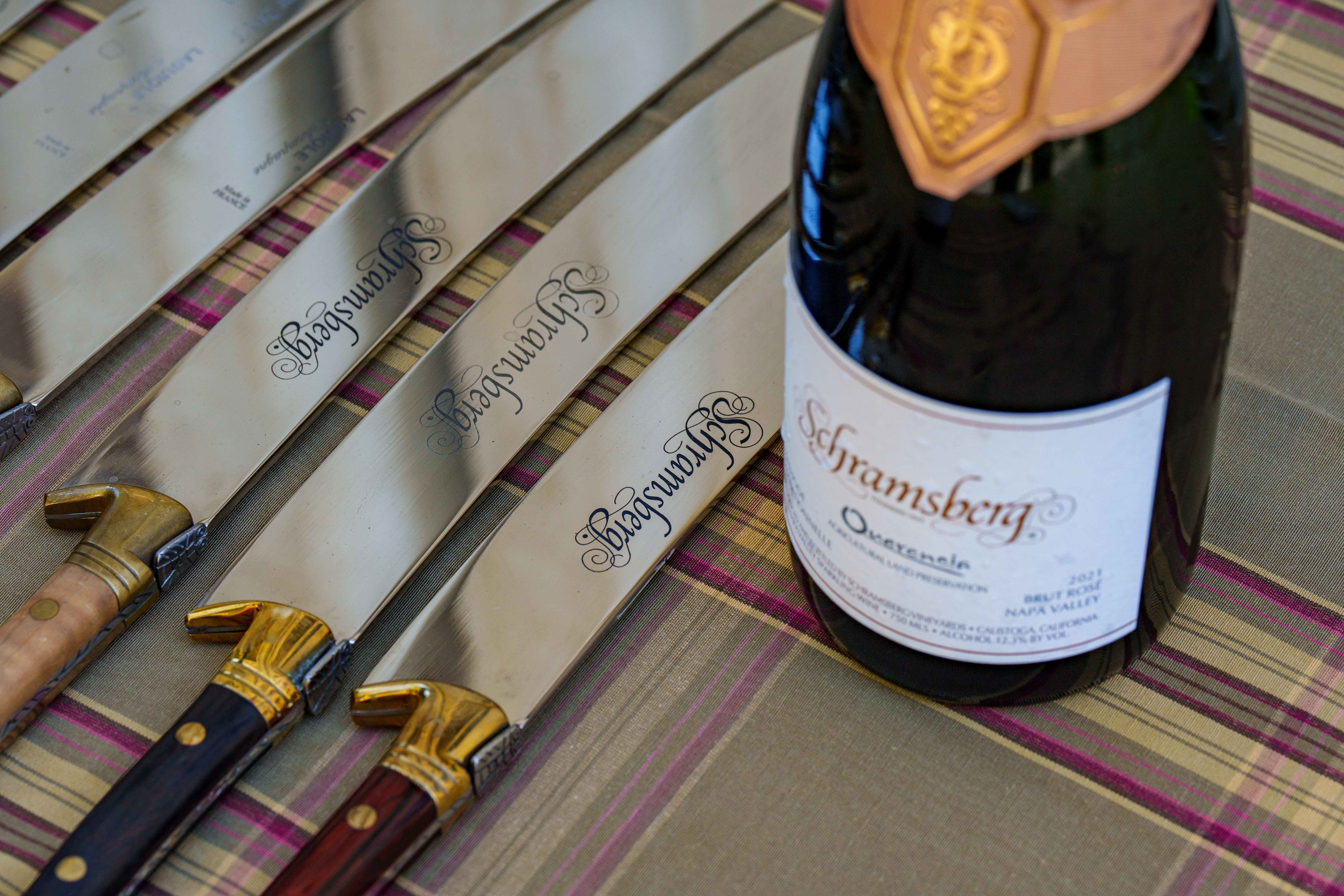
Sabering, or sabrage, traces to the Napoleonic era, when French cavalry officers opened Champagne bottles with their swords. At Schramsberg the practice has been folded into a blessing of the grapes: A bottle is struck open, then its foam poured over the fruit on the pad, a gesture meant to bring good fortune for the season.
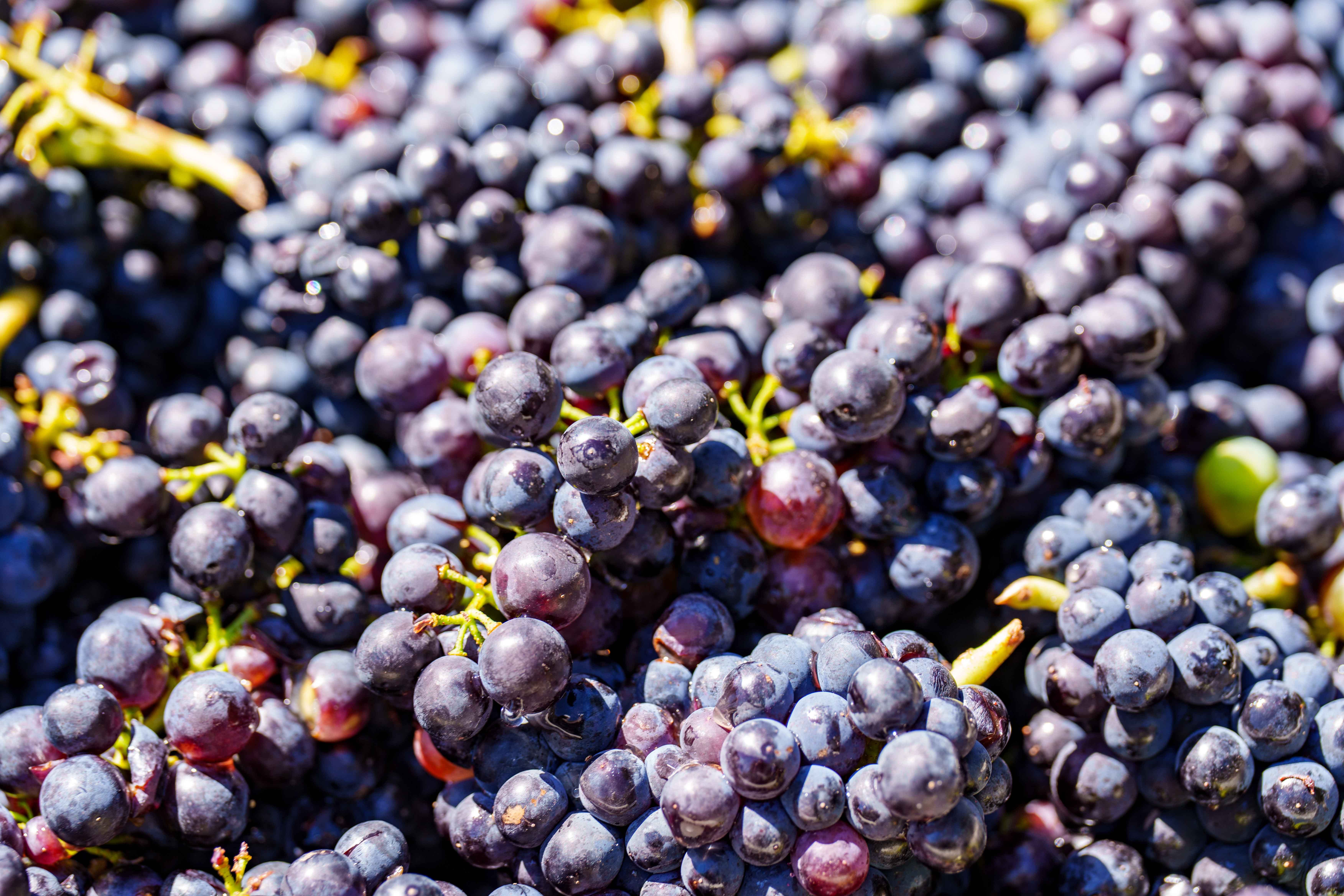
The fruit under the foam was 10 tons of pinot noir from Casa del Sol, Chris Dearden’s vineyard off Las Amigas Road in Carneros, Davies said. The Richburg Vineyard in Carneros, which served as the winery’s first pick for years, comes in Monday.
The ceremony was not the winery’s first fruit of 2026. Davies said Schramsberg picked Dutton Jewel and Dutton Perry on July 16 and 17 in the Green Valley pocket of the Russian River Valley in Sonoma County. The winery picked more Dutton Perry this week along with its Keefer Ranch block in Green Valley and its Horseshoe Bend Vineyard in Occidental.
Acid Running High
The fruit is arriving with more acid than usual. Davies said acidities have run 1 to 3 grams per liter above normal so far. The Casa del Sol pinot noir on the pad Thursday measured 18.5 Brix and 11.2 grams per liter of titratable acidity. A Dutton Perry lot recorded 18.8 Brix and 14.1 grams per liter, and a Dutton Jewel lot came in at 20.2 Brix and 12.8.
High acid at low sugar is the profile sparkling producers chase because it gives the finished wine its lift and its ability to age.
Davies said the vintage is unlike anything the winery has seen since 2015 in timing and in low yields, though he cautioned there is a long way to go. The mechanisms differ: 2015 was the fourth consecutive drought year and the vines put on very little growth, while 2026 was pulled forward by a warm March and early bud break followed by considerable shatter during bloom in pinot noir, especially in western Sonoma County. What the two years share, he said, is fruit depth and elevated acidity.
“I love the 2015s. They are bright and vibrant,” Davies said.

Chardonnay yields look light as well, Davies said, though closer to normal than pinot noir. Clusters are light and berries are small across the board, with more to learn as picking continues.
Steve Matthiasson, owner of Matthiasson Wines, described the same pattern from the valley floor, where bloom stretched across roughly six weeks.
“Very light crop, small clusters and surprisingly small berries, healthy vines, quality could be really good,” Matthiasson said, adding that he expected to start with whites in early August and sparkling fruit before that.
A Short Crop in a Soft Market
The ritual is celebratory. The economics around it are not. Napa’s 2026 crop is shaping up as one of the lightest in memory, a swing that eases years of wine oversupply while cutting income for growers who sell fruit by the ton. Vineyard consultants and growers interviewed by Napa Valley Features this month described wineries ending automatic contract renewals, walking away from signed agreements and pressing for lower prices — pressure a light crop does not relieve.
Family, Foam and the First Press
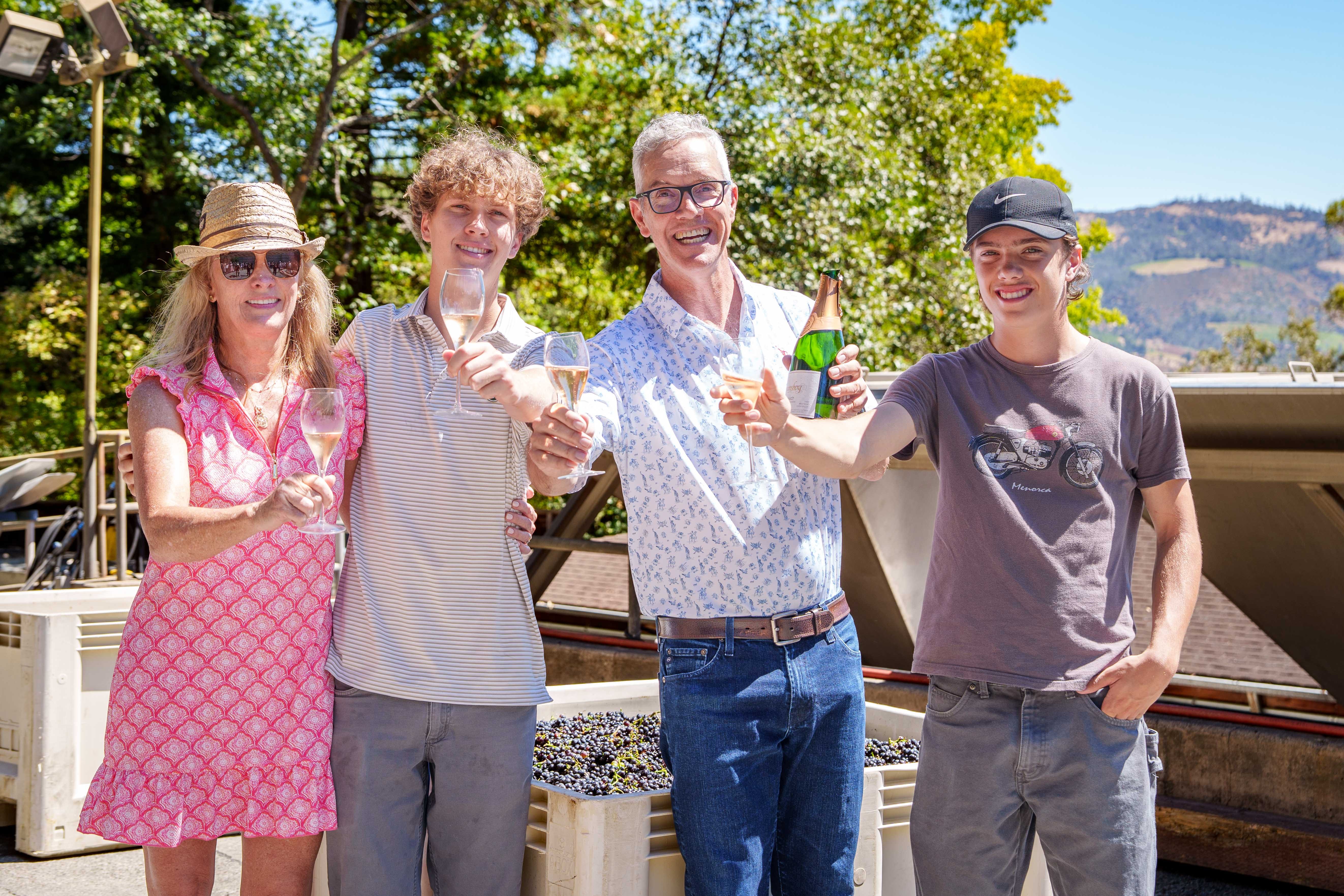
Monique Davies and two of the couple’s three sons, Nelson and Hughie, joined Hugh for a toast beside the bins, glasses of rosé raised over fruit still wet with sparkling wine. A third son, Emrys, is working in Idaho this summer.
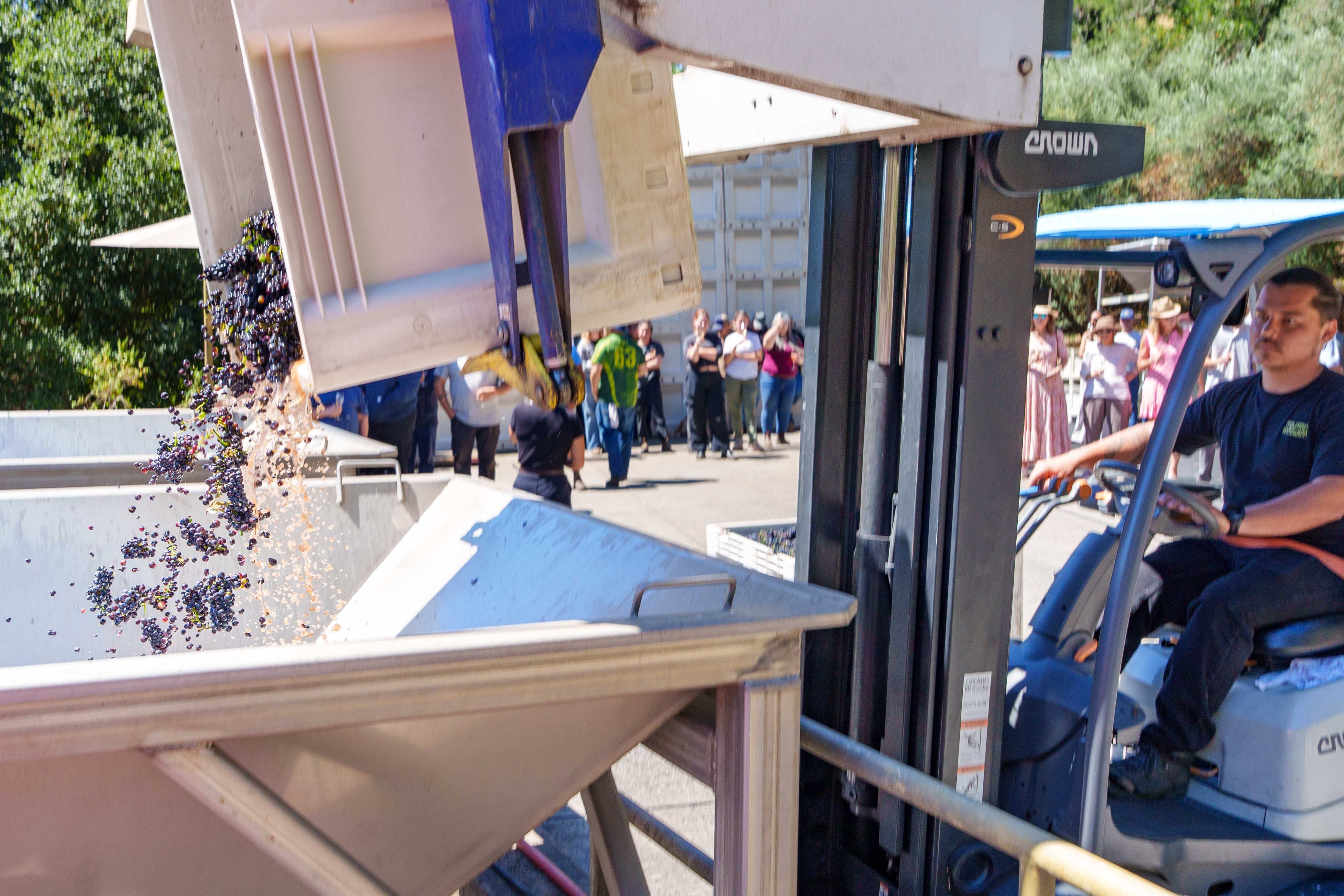
Then the forklift moved in, the bins tipped and the juice ran toward the press. The pageantry lasted a few minutes. Davies said cabernet could finish as early as late September or early October at the current pace.
--
Tim Carl is a Calistoga-based photojournalist.
Today’s Polls
Read More


The views, opinions and data presented in this article are those of the author and do not necessarily reflect the official policy, position or perspective of Calistoga Currents or its editorial team. Any content provided by our authors is their own and is not intended to malign any group, organization, company or individual.
Our illustrations are produced through a multistep process of generative tools, digital sketching and photo editing, often starting from our own images or sketches.