
Global Stack LLC Pitches a Statewide Fairgrounds Network; Calistoga Crowd Pushes Back
By Tim Carl / Linda York

Correction: An earlier version of this story misidentified the two children with Resa Jarvey as her son and daughter. They are her niece and nephew. Gary Ittig was misnamed Gary Giddings. Updated June 26, 2026.
—
Summary: A company called Global Stack told the Calistoga Fairgrounds Advisory Committee on June 25 that it wants to build a network of small “edge computing” sites, aerial shuttles and parking structures across 50 to 60 California fairgrounds, with Calistoga as one possible location. The company’s only near-term ask was a nonbinding memorandum of understanding to begin site-specific talks. More than 100 residents packed a standing-room-only meeting — among them younger people who pressed hard on chemicals, water and the technology itself — and the committee chair said afterward that the city had made clear it was not interested.
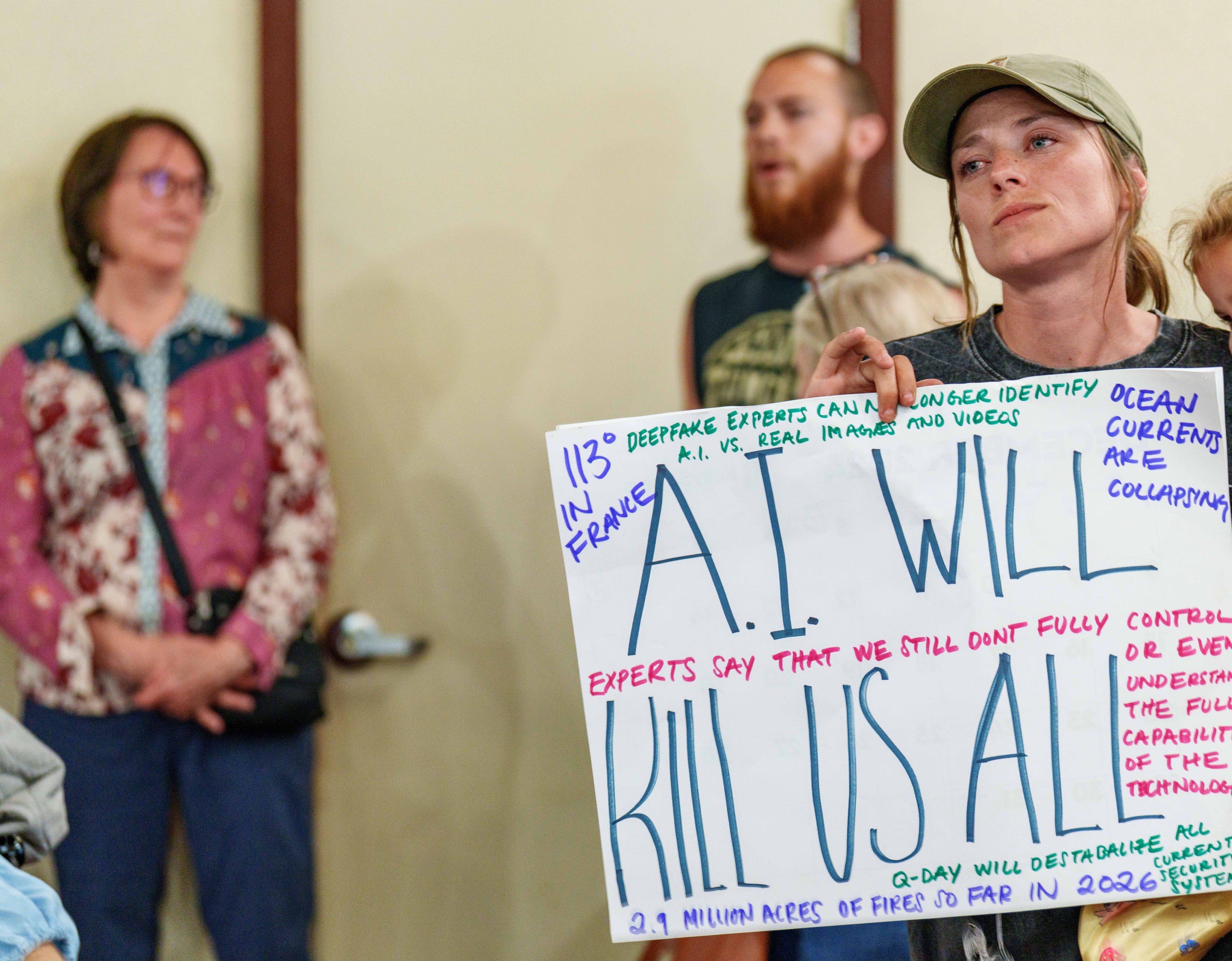
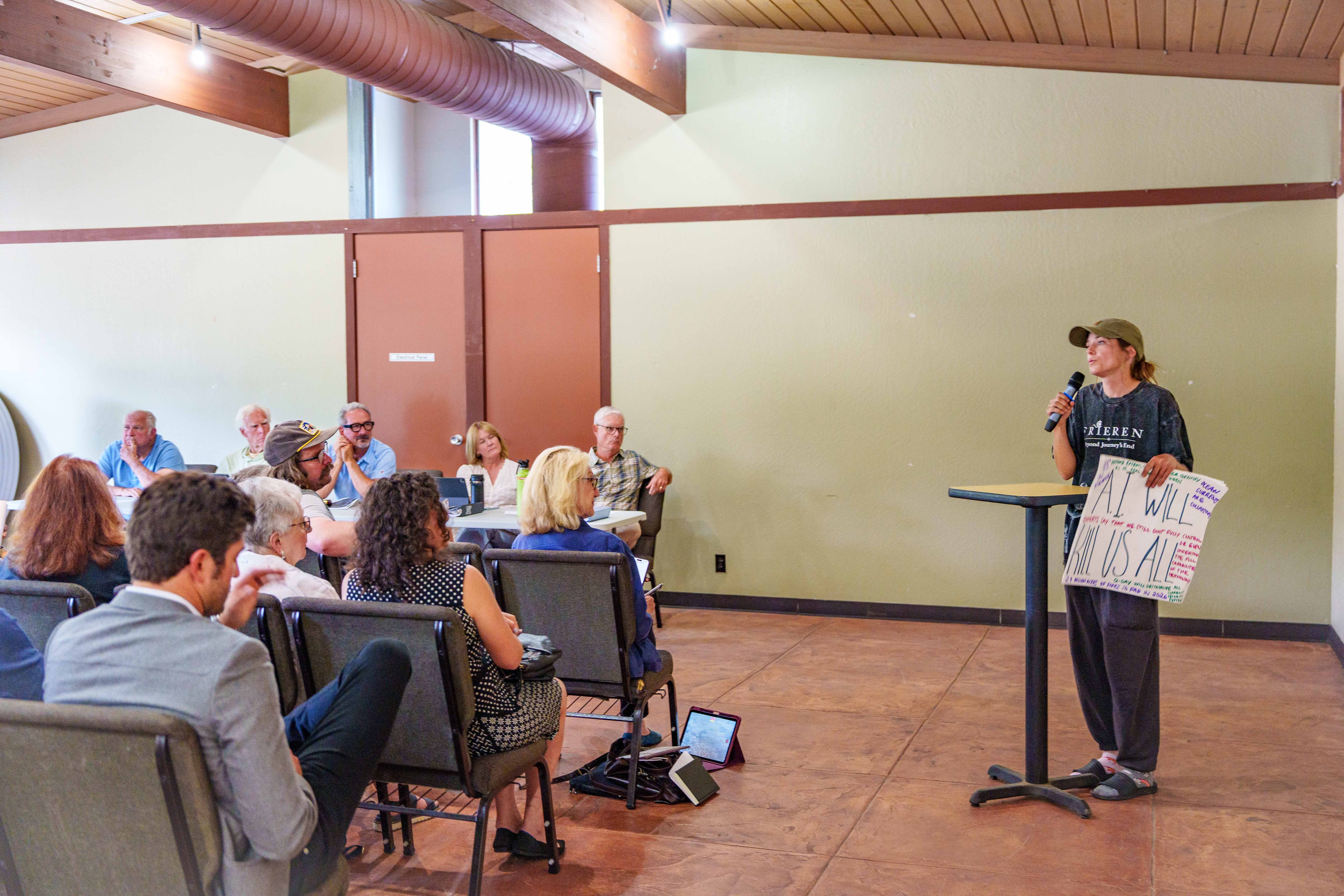
CALISTOGA, Calif. — She held her young niece on one hip and, at her side, a hand-lettered sign: “AI will kill us all.” Around its border, in marker, Resa Jarvey had catalogued the fears that brought her out — ocean currents she said were collapsing, 2.9 million acres of California burned so far this year, and a technology whose own experts, she wrote, “still don’t fully control or even understand.”
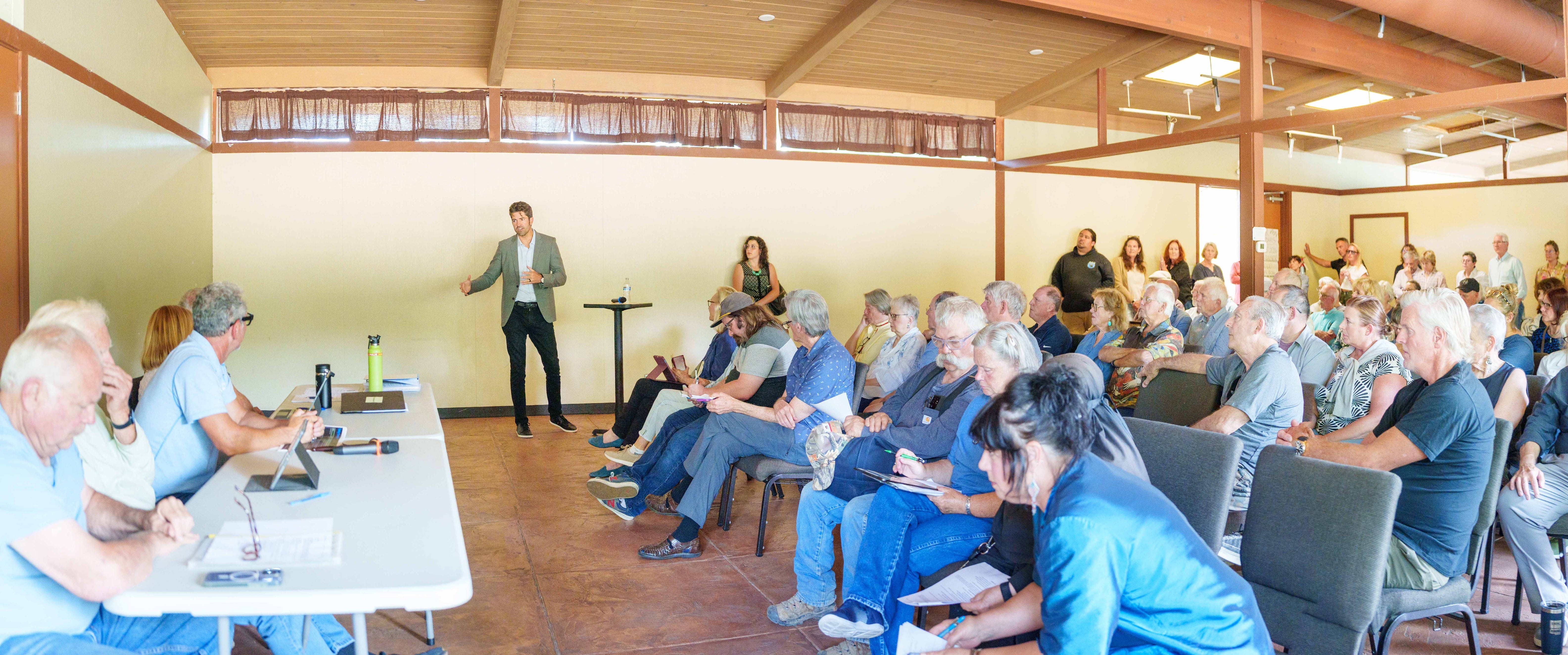
Jarvey, a community advocate who had brought her young niece and nephew, was one of only a handful of younger residents in a room that skewed older — and among the most uneasy. The presentation that drew more than 100 people to a standing-room-only meeting of the Calistoga Fairgrounds Advisory Committee on June 25 was offered as a local opportunity, but the company making it described something much larger: a plan to link 50 to 60 of California’s fairgrounds into a single privately built network of small computing sites and aerial shuttles, marketed as emergency-response infrastructure, with Calistoga as one possible site.
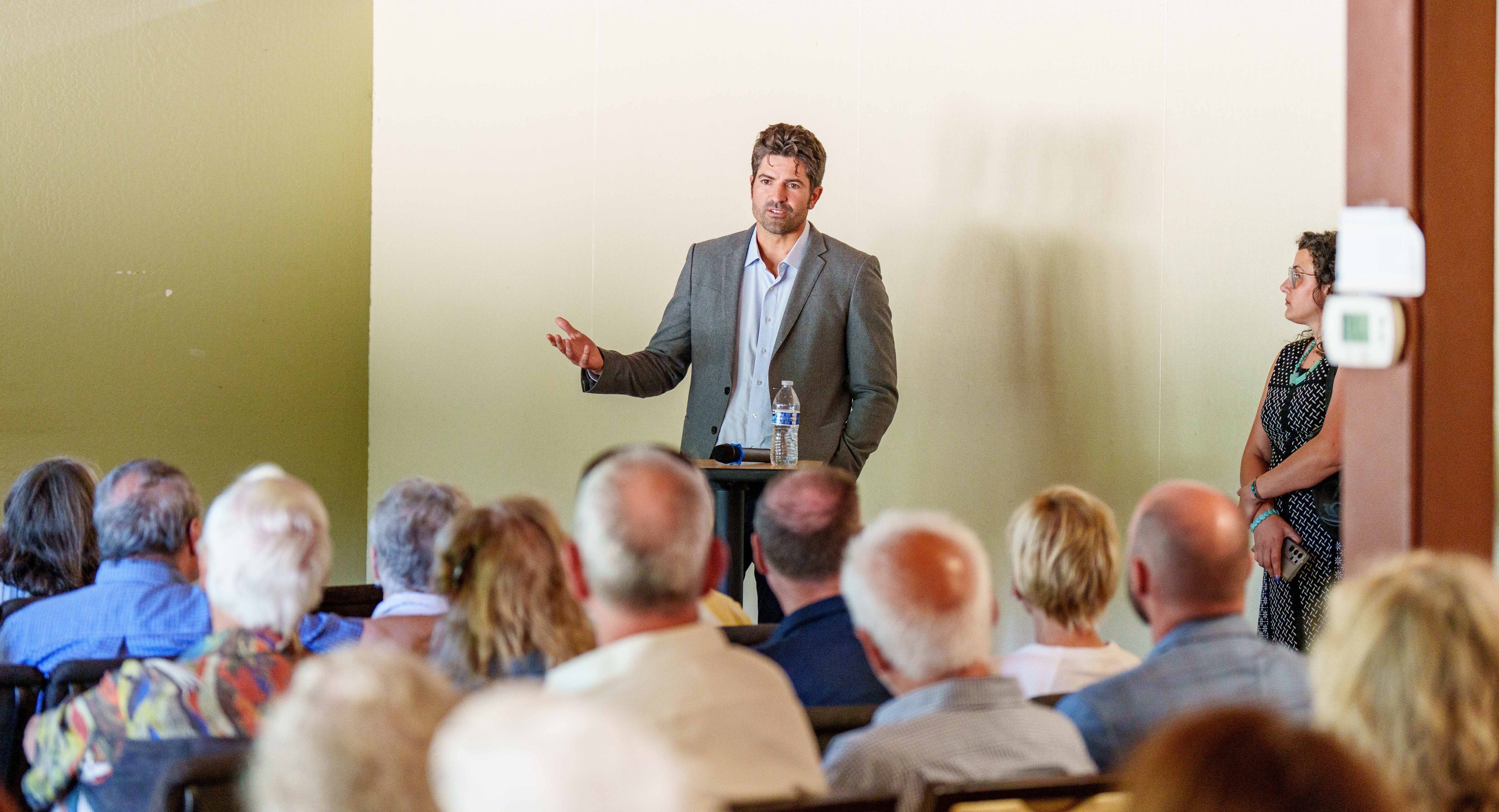
Nick Kovacevich, who identified himself as a Global Stack representative and a sitting member of the Orange County Fair Board, said the company wants to partner with fairgrounds “up and down the state,” beginning with a nonbinding memorandum of understanding at each site. Kovacevich previously co-founded and led KushCo, a cannabis-packaging company that merged with Greenlane Holdings in 2021, where he became chief executive. He stressed repeatedly that the concept was exploratory and that nothing was being decided. By the meeting’s end, the committee chair said the community’s message was clear.
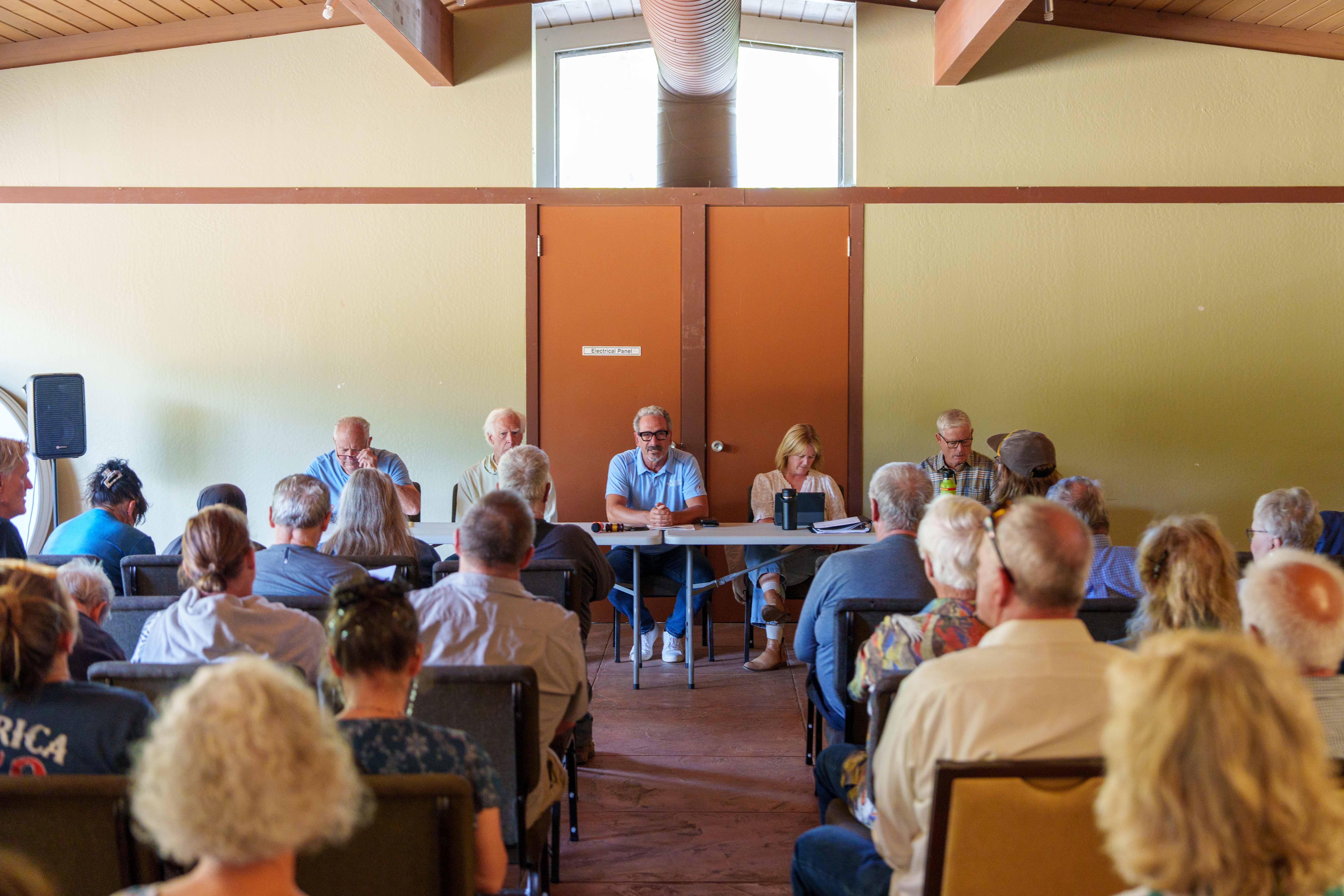
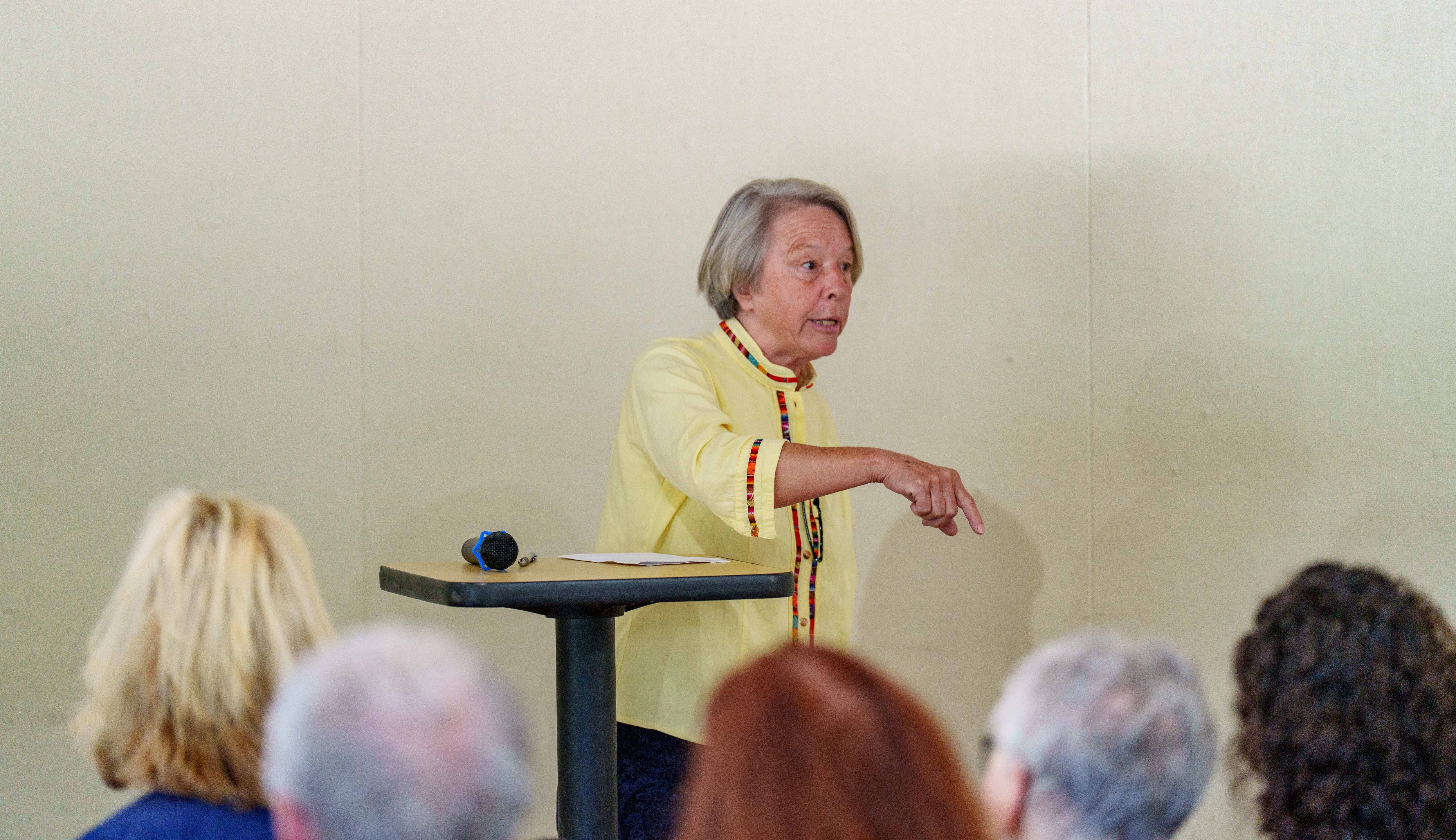
“This community is not prepared for such a venture in our town at this moment,” Chair Shane Pavitt said, summarizing the public comment. He noted that no vote had been scheduled — the item was for discussion only — and said the council now understood that Calistoga, “regardless of potential economic windfall, is not interested in a project like that.”
How the Vision Began
Kovacevich traced the concept to Dan Kang, a Newport Beach entrepreneur he described as the project’s visionary, and to a single question about disaster preparedness. In public records, a Newport Beach entrepreneur by that name is the founder and chairman of Berify, a company that uses blockchain technology — a tamper-resistant digital ledger — to verify that physical products are authentic and guard against counterfeits. A friend of Kang’s, Kovacevich said, had a plan for “the big one [a major disaster]” — a helicopter that would collect his family and carry them east of the fault line. Kang’s reaction, as Kovacevich told it, was to ask what everyone without a private helicopter would do. From that starting point the company arrived at an “aerial shuttle network,” modeled loosely on Blade, the private service that flies passengers between Manhattan and the Hamptons, but with a public-safety twist: the aircraft would operate commercially day to day, then default to state control during a declared emergency.
California, Kovacevich argued, is “woefully unprepared.” He said the state contracts with roughly 150 helicopters for emergencies and then has to hope, when disaster strikes, that the operators answer the phone and that their aircraft are available, maintained and fueled. A standing network tied to the fairgrounds, he said, would give the state evacuation capacity it can count on.
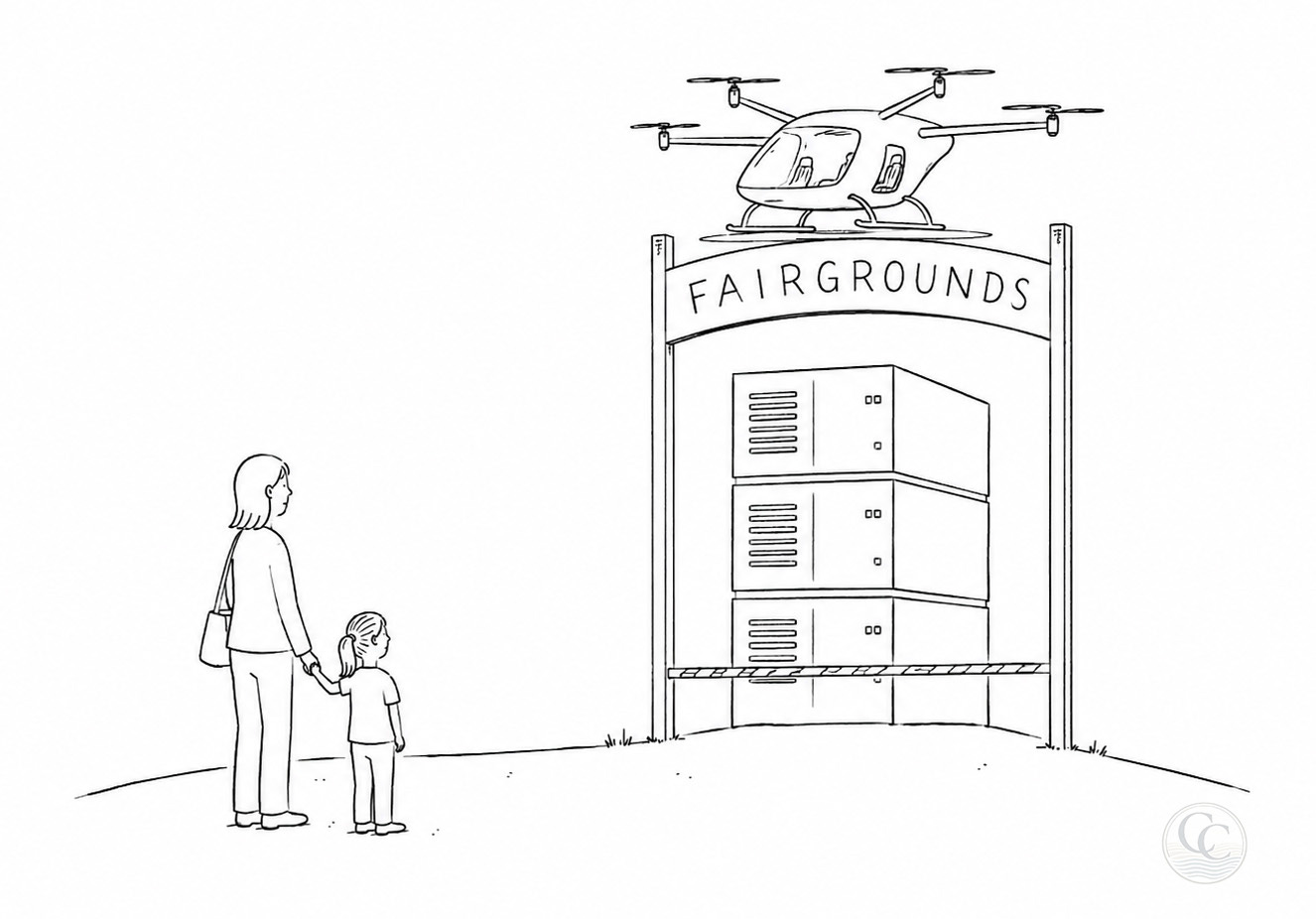
The aircraft at the center of that vision are not helicopters. Kovacevich said Global Stack intends to skip directly to eVTOLs — electric vertical takeoff and landing aircraft, sometimes called passenger drones or flying cars — built by companies such as Joby and Archer. Because no eVTOL is yet approved by the Federal Aviation Administration, he placed commercial use five to 10 years out and said helicopters would bridge the interim. He described the eVTOLs as quiet, piloted rather than autonomous, and seating six to nine, and argued they could eventually reshape where people live, letting workers commute by air from areas where housing is cheaper.
The computing piece, Kovacevich said, grew out of the aerial plan: an emergency shuttle network needs resilient communications, especially when cell service fails. That led to what he called “edge computing” — containerized units he said would draw under 10 megawatts, far less than a conventional data center. He framed the load as “good for the grid”: the sites could power down during peak demand to free electricity for the community, but, backed by batteries, would keep running through a blackout or a cell-network outage — the resilience he pitched as their emergency value. Stacked together, the components become a single structure: a parking garage two or three stories high, with the aerial shuttle landing on top and the edge computing housed below, returning to each fairground at least as much parking as the building consumes. Each site, he said, would run $20 million to $50 million.
A Statewide Network, Not a Calistoga Project
The most consistent theme in Kovacevich’s presentation was scale. He said California is the only state that owns a connected network of fairgrounds — roughly one in every county — and that this geography makes them ideal for a distributed emergency and computing system. He framed the build as a “circular economy” meant to keep computing contracts for fire departments, police and hospitals inside California, built with union labor, rather than routing them to national firms he said are leaving the state. He cited the 2028 Olympics as an emergency-preparedness driver in Southern California, where the company is focusing first, and pointed to the California Department of Food and Agriculture, which oversees the state-owned fairgrounds, the state Office of Emergency Services and new state artificial-intelligence legislation as part of the rationale.
The entry point everywhere is the same: a nonbinding memorandum of understanding allowing the company to bring in its design team and study each site. Gary Ittig, who has lived off Cedar Street for about 30 years and said his background was as a lawyer, told the committee the agreement was less benign than it sounded.
“Local staff is proposing a memorandum of understanding that essentially says you agree with us building an aero port and … a data center or edge computer center,” Giddings said, adding that both uses run “pretty contrary to what most of these people have been fighting for.”
What’s Proposed, and the Numbers Behind It
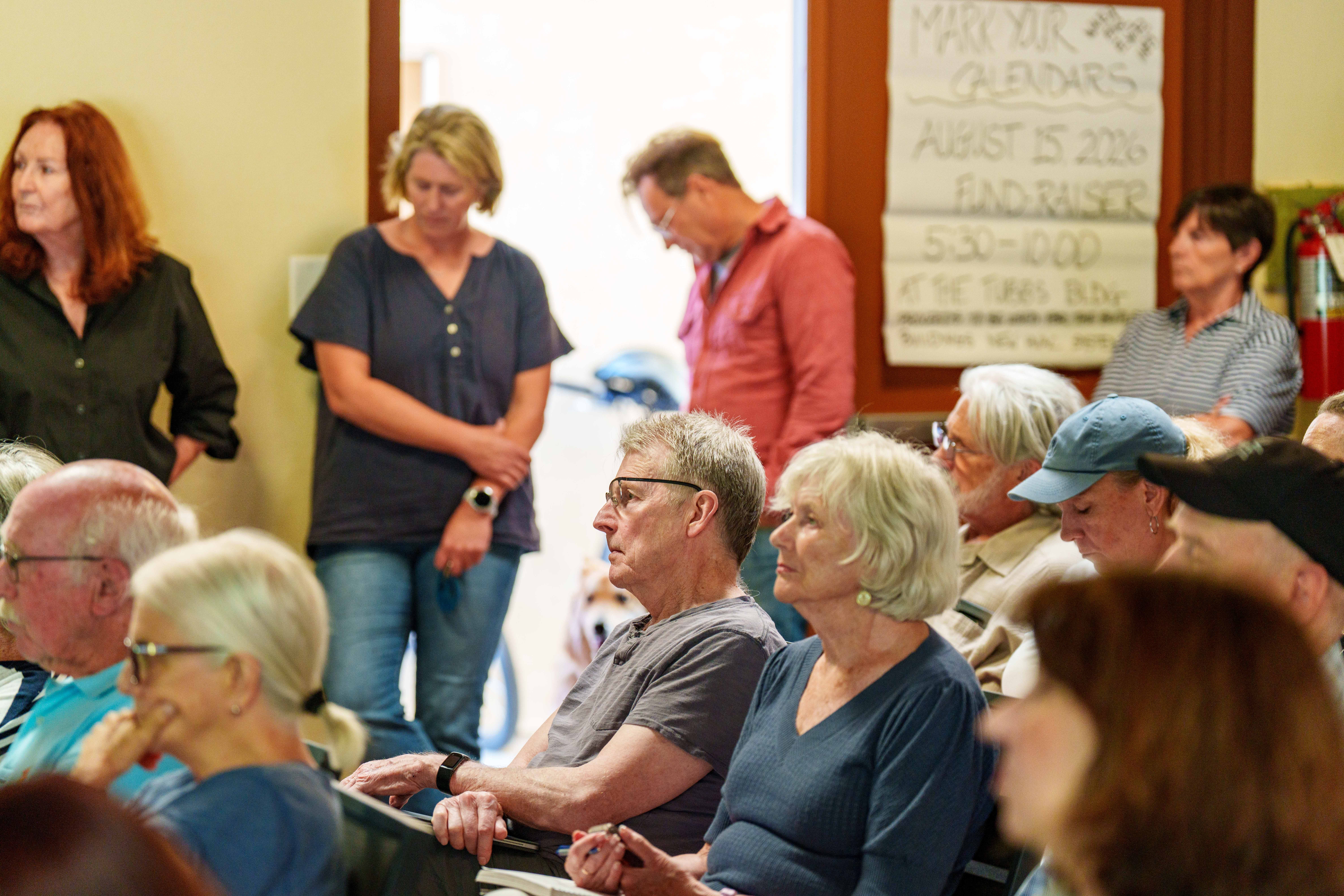
Much of the questioning turned on a single distinction: whether “edge computing” is meaningfully different from a data center. A committee member challenged it as a smaller data center under another name. Kovacevich maintained the footprint was far smaller and grid-friendly, and said the sites would not generate the runoff associated with large data centers.
One resident, who said he had studied the issue, disputed that directly. He pressed Kovacevich on PFAS — the “forever chemicals” associated with data-center operations — and pointed to the river beside the fairgrounds and the families raising children nearby. Kovacevich did not engage the chemistry.
“Nobody’s agreeing to any deal that does anything today,” he said, thanking the man for his passion. “All we’re doing is talking about a vision.”
Mick Loveland, who lives nearby on Fairway, put it more bluntly, saying everything he had read about data centers was bad — heavy demands on power and water, noise and few lasting jobs — and asked Kovacevich to explain plainly how the edge concept differed.
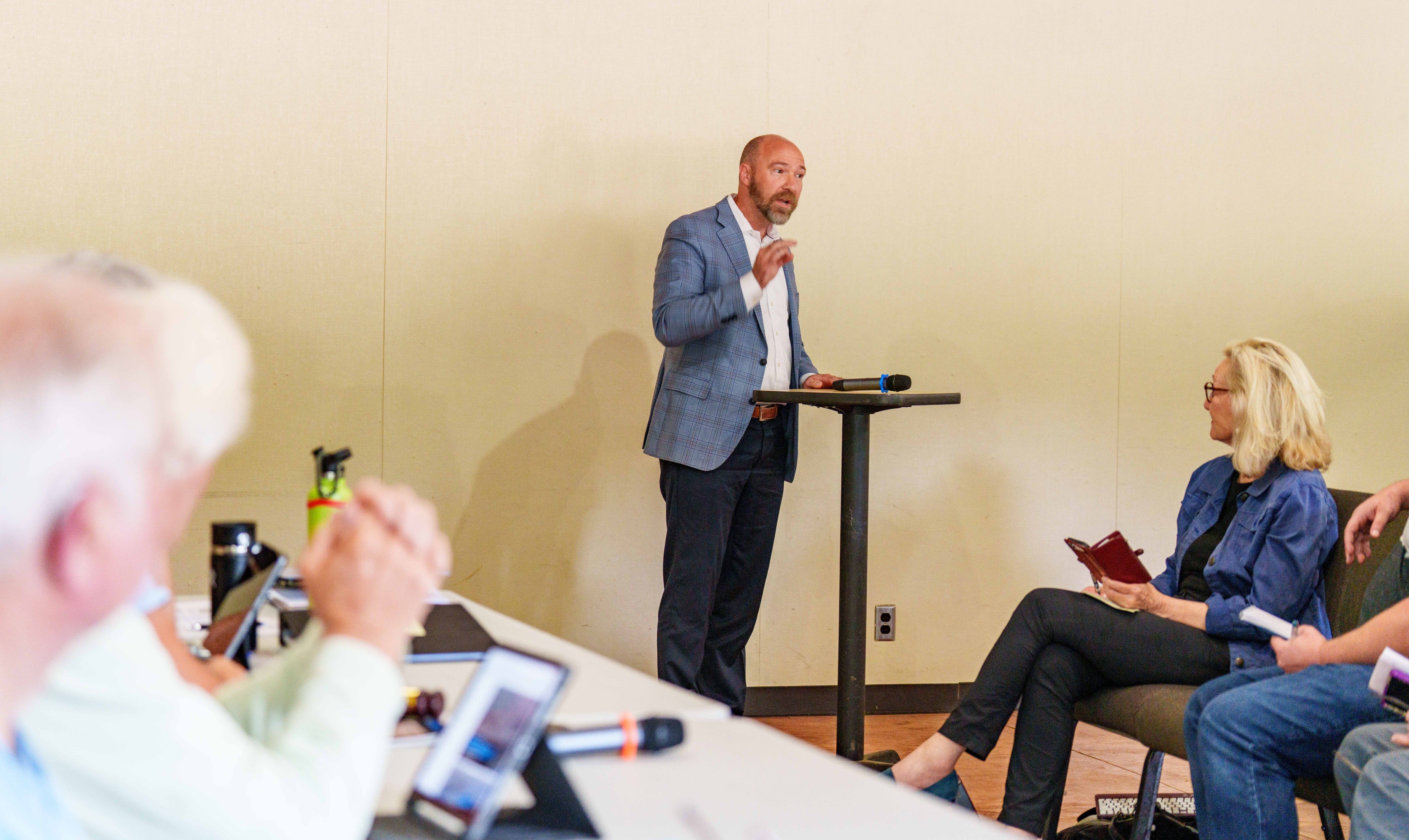
The financial figures that had circulated before the meeting did not survive it. The company’s slide deck paired a $6.3 billion investment with $2.24 billion in projected annual revenue. Pressed on how an “8 to 10 megawatt” facility — which industry benchmarks would put at roughly $100 million to $150 million to build — could carry a $6.3 billion price tag, Kovacevich said that figure was never meant for a single site; it was an estimate for the entire statewide network, every site and all parking and computing combined, drawn from an older version of the deck, with per-site investment closer to $20 million to $50 million. The $2.24 billion revenue figure, he said, came from that same outdated deck and was not a per-site number, and the company had since shifted to a “site-specific” model it had not yet documented. The result is that the only hard numbers Global Stack has put in writing are ones it now disavows, with nothing documented in their place.
Sonny Thielbar, a project consultant for Energy Vault who said evaluating such projects is his profession, told the committee he had researched Global Stack and found no comparable project it had built. He urged the committee to vet a company’s track record before giving it a public platform, saying these projects are “immensely complex” and that the city should make sure a partner “actually built one.” He also noted that a Calistoga resident works for Joby, one of the eVTOL makers Kovacevich had cited. Global Stack itself has little findable web presence; a search turned up a simple company website and no record of a completed project, consistent with Kovacevich’s description of the venture as early-stage.
A Plan the Committee Hasn’t Finished
Residents who spoke fell into roughly three groups: a large middle that was skeptical but curious, a group opposed outright over water, electricity, chemical contamination and the property’s non-historic use, and a smaller group that felt the idea was worth continued conversation. Most of the middle returned to one point — that Calistoga has no adopted master plan against which to weigh any proposal. The committee itself was created in 2025 and made permanent in January, with developing that revitalization plan as its central charge; that work is still underway.
“We need to know where this property is going to go, we need to know what we want to do with it, and that starts with a proper planning process,” said resident Doug Allan, who urged the committee to build a community-approved plan before evaluating proposals.
There were loud cheers when a speaker asked why a proposal this early in its development had been brought before the community at all.
Residents disagreed about whether such input already exists. Some pointed to a community survey they said captured a preference for preserving open space and small-town character; others argued no adequate planning process had occurred. The survey in question was conducted by FM3 Research for the City of Calistoga between Sept. 20 and Oct. 12, 2025; the firm collected 641 phone and online responses and presented results to the city council in November. Just 1% of respondents wanted housing at the fairgrounds, while 86% prioritized keeping the site as an emergency evacuation center and 80% supported leasing portions to vendors to help fund operations.
Charlotte Williams said it was “grotesque” to talk about a master plan without significant representation from Calistoga’s Spanish-speaking community, noting the city is at least half Hispanic and that meetings held in English on weeknights exclude residents who work long hours and lack the time to attend.
When her turn came, Jarvey argued the fairgrounds should stay a community space rather than one “used for billionaires to make more profit.” She said the project would strain Calistoga’s limited water and threaten the reliable power that older residents nearby depend on for life-saving medical equipment, and that communities where similar ventures have arrived are “raising the red flag.”
She was not the only younger resident carrying that unease; the man who raised the chemical concerns spoke, too, of neighbors “who want to raise their families here.” For both, the worry ran less to this one company than to the direction of the technology itself and the world the next generation will grow up in.
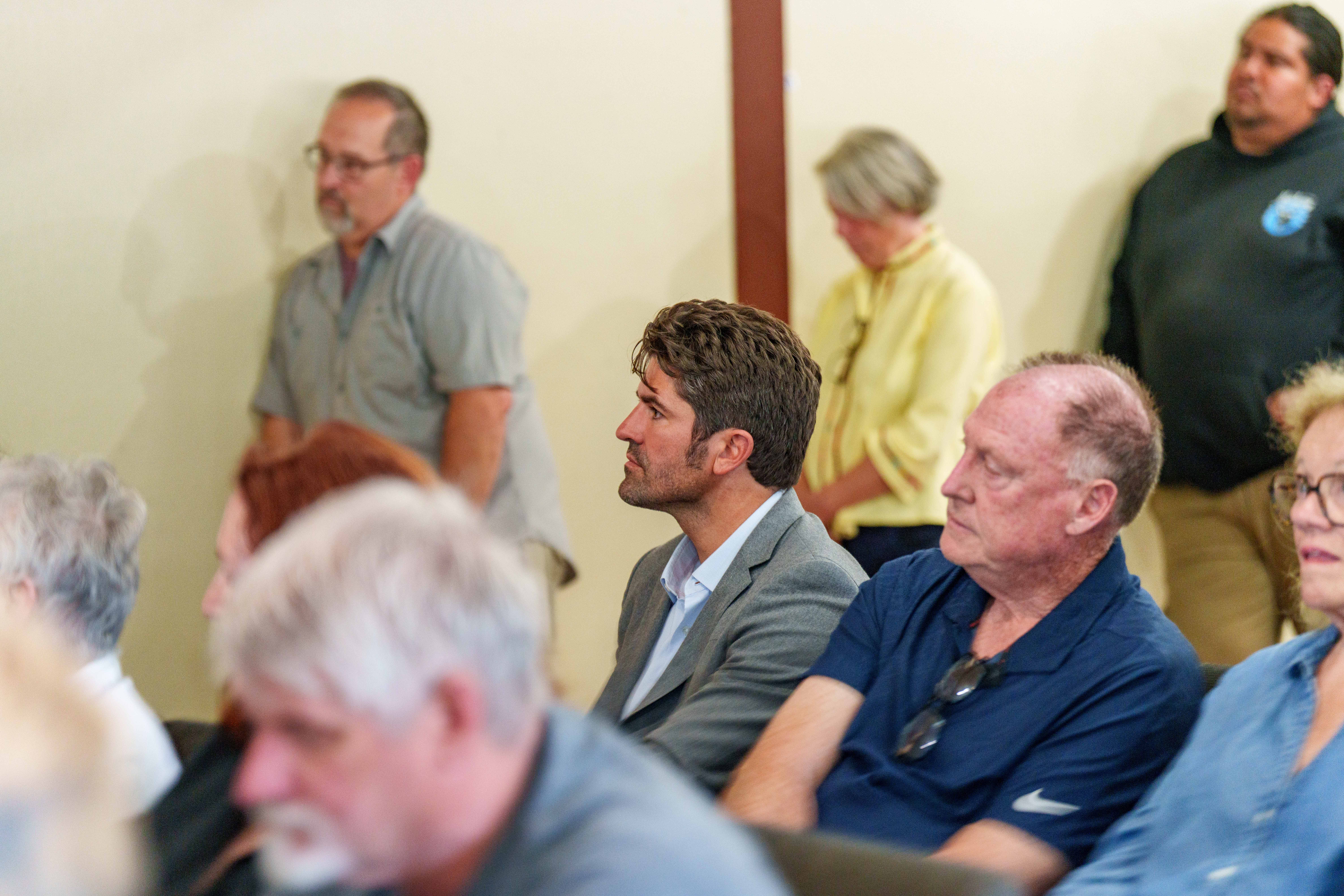
A Deed That Limits Use
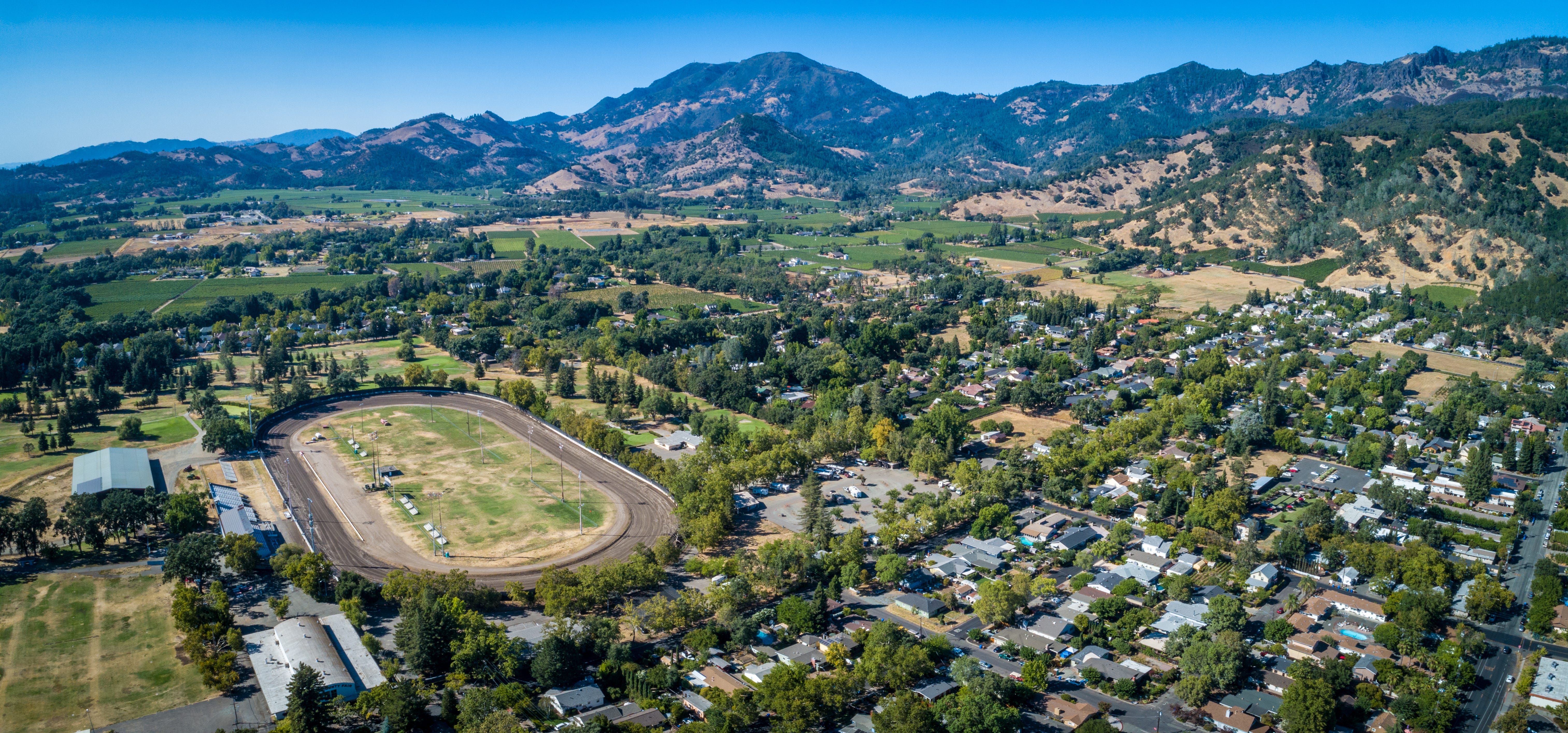
Underlying the debate is a restriction the city accepted when it bought the roughly 70.6-acre fairgrounds from Napa County for $2 million, a sale the county approved in January 2024. The purchase agreement limits the property to its historical uses — among them the county fair, the speedway, a golf course, the RV park, event space and emergency response — bars leases longer than 25 years and lets the county repurchase the property under certain conditions. Should Calistoga move to rezone or sell the land, the county can buy it back at the original $2 million price, adjusted for inflation.
Those terms cut against the proposal. A computing facility, an aerial shuttle network and a parking structure are not among the property’s historical uses, and the kind of long-term commitment Global Stack envisions — Kovacevich floated a 135-year horizon, tied to the Orange County fair’s age — would run up against the 25-year lease cap.
The deed’s constraints were contested when the sale was finalized. In a letter to the Calistoga Tribune, former Mayor Chris Canning called the county’s buyback provision a “fatal flaw,” arguing that the public-private partnerships the property will need to survive would be sharply limited by the clause. Councilmember Scott Cooper, addressing the related historical-use restriction as the council approved the agreement, took the opposite view, saying the contract would allow anything permissible under current zoning and that “scores and scores of ideas” already fit.
Where It Stands
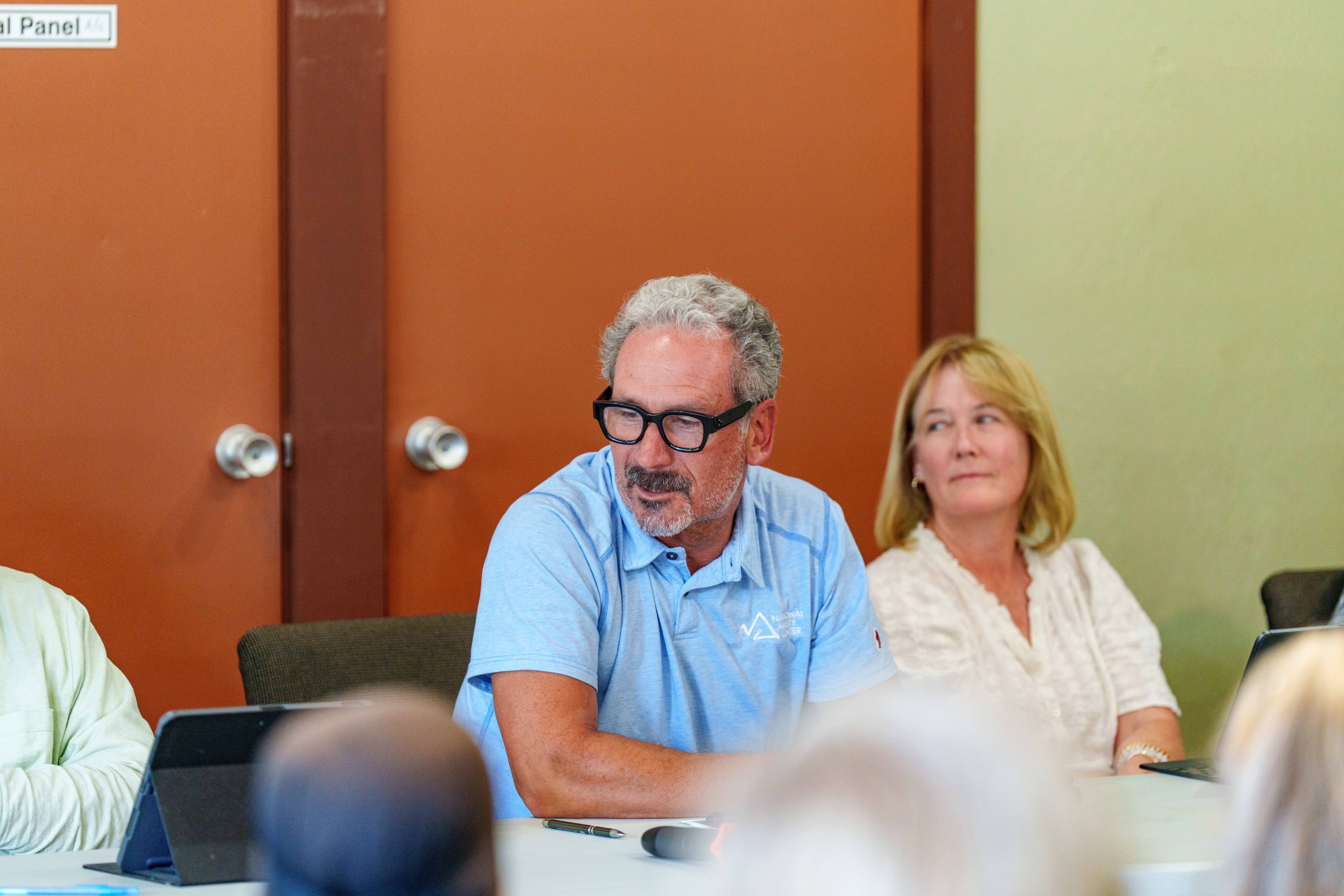
No vote was scheduled and none was taken. Mayor Don Williams and Councilmember and Vice Mayor Lisa Gift attended as council liaisons but did not speak on the proposal. Vice Chair Karen Jensen was among the more positive voices, saying the presentation opened her mind to possibilities and raised useful questions about how the city would power future infrastructure. Fairgrounds Revitalization Director Sheli Wright called the concept futuristic and said she doubted it would happen in Calistoga first, but wanted to hear what other fairgrounds are doing.
For now, the only thing Global Stack put before the committee was a nonbinding memorandum of understanding — the same first step it is offering fairgrounds across the state — and even that, most who spoke agreed, was premature.
For Jarvey, the stakes ran beyond a single proposal. It is wrong, she said, “as we are moving into phases of the climate collapse that are completely undoable,” to “continue to push in this direction.” The valley, she said, needs “more sustainable solutions for the future.”
“I don’t want this for my family — I don’t want it for the valley,” she said.
—
Tim Carl is a Calistoga-based photojournalist. Linda York is a Calistoga-based writer.
Today’s Polls
Read More


The views, opinions and data presented in this article are those of the author and do not necessarily reflect the official policy, position or perspective of Calistoga Currents or its editorial team. Any content provided by our authors is their own and is not intended to malign any group, organization, company or individual.

Thank you for the kind in-depth coverage of an important happening in our city.